
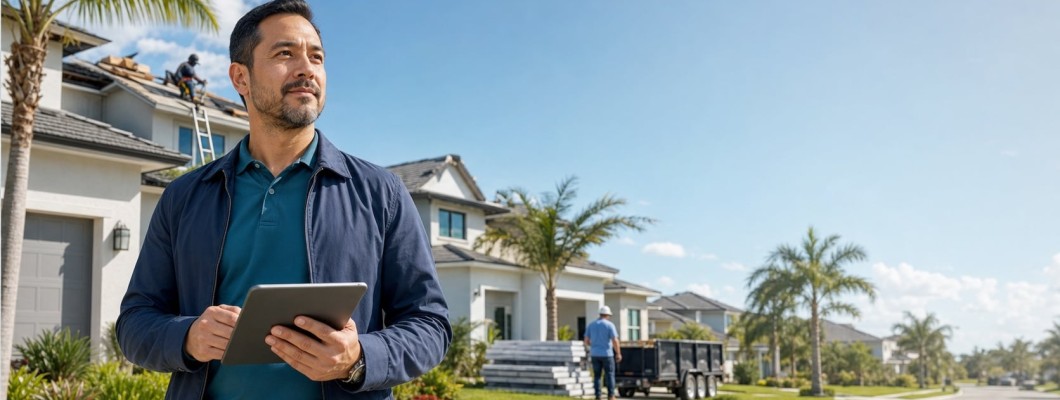
Is Becoming a Florida Insurance Claims Adjuster a Good Career Move in 2026, and Who Is It Right For?
If you live in Florida, you don’t have to look far to see why insurance claims adjusters stay busy: hurricanes, heavy storms, coastal flooding, and a lot of valuable property packed into one state.
You may have heard that Florida insurance claims adjusters can make strong income, travel for catastrophe deployments, and even work remotely. But what does the job really look like in 2026—and is it a smart move for you?
This guide breaks down:
- The 2026 outlook for adjusters in Florida
- Realistic Florida claims adjuster salary ranges (not hype)
- The difference between catastrophe (CAT) adjusters and daily claims adjusters
- Travel-heavy field roles vs. local or desk/remote roles
- Personality traits and backgrounds that tend to do well
- How to get your Florida adjuster license and training if you decide to move forward
1. 2026 outlook for Florida insurance adjusters
Why demand is still strong in Florida
Several long-term trends point to continued need for skilled Florida insurance claims adjusters in 2026 and beyond:
1. Hurricanes and severe weather aren’t going away
Florida sees a high share of U.S. hurricane landfalls and tropical systems. Recent seasons have shown how a single major storm can generate tens of thousands of claims in a matter of days. Carriers and independent adjusting (IA) firms must be ready to scale up quickly—something only trained adjusters can do.
2. Population growth and property values
Florida’s population has grown rapidly over the last decade, and many of those new residents live in coastal or storm-prone areas. Higher populations plus rising property values mean more insured exposure—and more claims when events happen.
3. Regulatory and litigation environment
Florida has a unique insurance market, with ongoing legislative and regulatory changes aimed at stabilizing carriers and controlling costs. Even as rules shift, carriers still need licensed people who understand policies, documentation, and compliance to investigate and settle claims correctly.
“But what about technology and AI—are adjuster jobs going away?”
Technology is absolutely changing how adjusters work:
- Aerial imagery and drones help inspect roofs and large losses.
- Policy and claim management platforms streamline documentation.
- AI tools can assist with routing, fraud detection, and initial damage estimates.
However, tech hasn’t replaced adjusters—especially in property-heavy states like Florida. Here’s why:
- Most claims still require a human to verify damage, interpret policy language, and communicate decisions to policyholders.
- Complex, high-dollar, or disputed claims often need experienced adjusters more than ever.
- During catastrophes, carriers rely on teams of licensed adjusters to physically inspect and close large volumes of claims quickly and fairly.
In other words, technology is more about making good adjusters more efficient than replacing them outright.
Bottom line for 2026: If you build solid technical skills and strong customer-service habits, there is likely to be steady demand for qualified Florida adjusters for years to come.
Want to train for this role online? OLT’s 40-hour Accredited Claims Adjuster (ACA) course is fully online, includes the final exam online, and is designed to qualify eligible students to waive the separate Florida state licensing exam.
View the Florida 6-20 ACA course2. Income potential and how adjusters are paid
Let’s talk money—realistically.
According to U.S. Bureau of Labor Statistics data for 2024, the national median pay for claims adjusters, examiners, and investigators is in the mid–$70,000s per year. Florida-specific job listings for staff property adjusters often fall in the $60,000–$80,000 range, depending on experience and carrier.
But adjuster pay is not one-size-fits-all. Your income depends on several factors:
- Staff (W‑2 employee) vs. independent/1099
- Daily claims vs. catastrophe (CAT) deployments
- Property vs. auto vs. other lines
- Your experience, productivity, and willingness to travel
- How active each hurricane and storm season is
Common pay structures
1. Salary (W‑2 staff adjuster)
Many daily claims adjuster and desk adjuster roles at carriers and large IA firms are salaried employee positions. You’re paid a set annual amount, may receive benefits, and might earn bonuses based on performance.
2. Fee schedule (independent/CAT adjuster)
Independent catastrophe adjusters are often paid based on a fee schedule—a chart that lists how much is paid per claim based on the size of the loss. The carrier or IA firm collects the full fee and pays you a percentage (commonly 60–70%+), depending on your agreement and experience.
Your income is heavily driven by how many claims you can inspect, estimate, and close accurately during a deployment.
3. Daily rate or per diem
Some independent adjusters are paid a flat daily rate when deployed (for example, for desk CAT roles working 12-hour shifts). This is more common for certain catastrophe desk assignments.
Realistic annual income ranges in Florida (non-guaranteed)
These are approximate ranges based on recent salary data, industry reports, and typical Florida conditions. They’re not guarantees—your actual results can be higher or lower.
Entry-level daily claims adjuster (staff, W‑2)
If you’re new, working local or regional property/auto claims for a carrier or IA firm:
- Approximate range: $45,000–$60,000/year starting out
- With solid performance in the first few years, moving to $55,000–$70,000 is common
You may receive benefits, paid time off, and a more predictable paycheck.
Experienced daily property adjuster
After several years of experience, strong file quality, and perhaps some specialty training (e.g., large loss, commercial lines):
- Approximate range: $65,000–$90,000+ per year as a staff or senior field adjuster
- Some highly experienced adjusters in leadership or specialized roles can exceed $100,000, but that isn’t automatic and typically takes time.
Catastrophe (CAT) property adjuster during active seasons
Independent CAT adjusters can earn high income during deployments but face more variability overall.
Industry sources and adjuster training providers commonly report:
- Newer CAT adjusters on moderate events may net around $500–$800 per active workday once they are up to speed.
- Experienced, efficient CAT adjusters on major hurricanes sometimes report $1,000–$1,500+ per working day during peak deployment.
Over a full year, that can translate to something like:
- Modest CAT year (few deployments): maybe $40,000–$70,000
- Strong CAT year (several solid deployments): potentially $80,000–$150,000+
But remember:
- There can be long slow periods with little or no income between events.
- You’re responsible for taxes, health insurance, travel, and equipment as a 1099 contractor.
- You need a financial cushion to bridge gaps between storms.
Desk/remote adjuster roles
Desk roles vary widely, but in Florida it’s common to see:
- Entry-level desk adjuster: roughly $45,000–$60,000/year
- Experienced desk adjuster or complex claims: roughly $60,000–$85,000+
Some CAT desk roles may pay a higher daily rate for 12-hour shifts during major events, but they may be temporary or seasonal.
Feast-or-famine realities for CAT work
CAT adjusting can look extremely attractive when you hear stories like “I made six figures in two months.” What’s often left out:
- The adjuster may have years of experience and a strong reputation.
- They may have worked seven days a week, 12–16 hours a day under intense stress.
- That level of income may not repeat every year.
If you’re considering CAT work, plan to:
- Keep 3–6 months of living expenses in savings.
- Budget carefully in strong years to cover slow seasons.
- Build relationships with multiple IA firms, so you have more chances to deploy.
Want to train for this role online? OLT’s 40-hour Accredited Claims Adjuster (ACA) course is fully online, includes the final exam online, and is designed to qualify eligible students to waive the separate Florida state licensing exam.
View the Florida 6-20 ACA course3. Catastrophe (CAT) adjusting vs. daily claims work
CAT and daily claims adjusting can feel like two very different careers, even though both require a Florida adjuster license and similar core skills.
What catastrophe (CAT) adjusters do
Catastrophe adjusters respond to large events—hurricanes, major windstorms, widespread hail, floods (where covered), and other disasters.
Typical CAT deployment might include:
- Traveling to an affected region (often on short notice)
- Staying in hotels or short-term rentals for weeks to months
- Inspecting multiple properties per day—sometimes 4–8 or more
- Climbing roofs, documenting structural damage, measuring rooms, taking photos
- Writing detailed estimates with software like Xactimate
- Working long days, often 10–14 hours, 6–7 days per week during peak
Pros of CAT adjusting:
- Potential for high income in a short period during strong seasons
- Opportunity to travel and see different regions
- Intense, focused work that can be very rewarding when you help families recover
Cons of CAT adjusting:
- Income is unpredictable and seasonal
- Physically and mentally demanding—heat, ladders, long hours
- Time away from home and family, often with limited control over dates
- Requires strong self-discipline and organization to keep up with large claim volumes
What daily claims adjusters do
Daily adjusters handle the “everyday” claims that are constantly flowing in—wind damage, water leaks, auto accidents, slip-and-falls, and more.
Common elements of daily work:
- More local or regional assignments
- Regular business hours with some after-hours or weekend work during busy periods
- A steady stream of claims rather than big spikes
- Mix of field inspections, phone work, and documentation
Pros of daily claims adjusting:
- More predictable income and schedule
- Easier to manage around family life, school schedules, or another part-time role
- Good environment to build foundational skills and experience
Cons of daily adjusting:
- Typically lower short-term earning potential than peak CAT deployments
- May feel more routine or less “adventurous”
- Can still be stressful when caseloads are high or storms affect your territory
Which is better for you?
Ask yourself:
- Do I want adventure, travel, and big but unpredictable paydays? → CAT may be a better fit.
- Do I prefer stability, routine, and a local life? → Daily claims is likely a better option.
Some adjusters build their careers by starting in daily roles, then transitioning into CAT once they have experience. Others do the opposite or blend both (daily work most of the year, CAT when big events hit).
4. Travel-heavy field roles vs. desk/remote adjuster jobs
Beyond CAT vs. daily, you’ll also want to consider whether you’re more suited to field adjuster work or desk/remote adjuster work.
Life as a field adjuster
Field adjusters are the ones who visit damaged properties in person.
Your days may include:
- Driving several hours between inspections
- Climbing onto roofs and into attics or crawlspaces
- Walking through damaged homes and businesses
- Meeting policyholders face-to-face, often right after a stressful event
Field work is a good fit if you:
- Enjoy being on the road and not sitting at a desk all day
- Are reasonably physically fit and comfortable with ladders and outdoor work
- Like solving problems on-site and interacting with people in person
Field work may be challenging if you:
- Dislike driving long distances
- Have mobility issues that make ladders or uneven terrain difficult
- Prefer a predictable indoor work environment
Life as a desk/remote adjuster
Desk adjusters handle claims primarily via phone, email, and software tools. In many cases, desk roles can be performed from a traditional office or from home, depending on the employer.
Desk adjusters may:
- Take first notice of loss (FNOL) calls and gather initial information
- Review photos, estimates, and reports from field adjusters or vendors
- Evaluate coverage, negotiate settlements, and document claim decisions
- Work set shifts and handle a steady queue of files
Desk work is a good fit if you:
- Prefer computer- and phone-based work
- Are comfortable talking to people over the phone all day
- Enjoy digging into details, coverage language, and documentation
- Value the option to work remotely (if available) or in a stable office environment
Desk work may be challenging if you:
- Hate being on the phone or in front of a screen for long periods
- Find heavy documentation and note-taking tedious
- Crave constant variety in your physical environment
Some adjusters move from the field to desk roles later in their careers to reduce travel and physical demands, while still using their experience and judgment.
Want to train for this role online? OLT’s 40-hour Accredited Claims Adjuster (ACA) course is fully online, includes the final exam online, and is designed to qualify eligible students to waive the separate Florida state licensing exam.
View the Florida 6-20 ACA course5. Personality, work style, and background fit
The adjusters who thrive in Florida tend to share certain traits regardless of whether they’re in CAT, daily, field, or desk roles.
Traits that tend to do well
You’re more likely to enjoy and succeed as a Florida insurance claims adjuster if you are:
- Detail-oriented: You’re comfortable documenting thoroughly, following procedures, and catching small but important details in photos, estimates, and policy language.
- Resilient under stress: You’ll often talk to people on some of their worst days. They may be emotional or frustrated. Staying calm and professional is key.
- Organized: Especially in CAT work, you might juggle dozens of open files at once. Task lists, calendars, and solid time management are essential.
- People-focused but firm: You’re empathetic, but you can also deliver tough news when something isn’t covered and stand by your decisions.
- Comfortable with technology: Most work runs through claims systems, estimate software (like Xactimate), mapping tools, and mobile apps. You don’t have to be a programmer, but you should be willing to learn.
- Willing to learn policy language: Coverage decisions hinge on specific wording. Successful adjusters embrace the learning curve.
How different backgrounds can transfer well
Many adjusters come from other careers. If you’re in one of these fields, you may have more transferable skills than you think:
- Construction or trades: Strong understanding of how homes and buildings are built, what repairs cost, and how damage progresses. Extremely valuable for property adjusting.
- Real estate or property management: Familiarity with property values, local markets, contracts, and working with homeowners and tenants.
- Law enforcement or military: Experience with investigation, interviewing, documentation, and handling stressful situations calmly.
- Teaching or education: Communication skills, patience, and the ability to break complex topics into understandable pieces—great for explaining coverage and next steps to policyholders.
- Customer service, call centers, retail, hospitality: Daily experience dealing with people, solving problems, and staying professional even when customers are upset.
If you’re willing to learn the technical side—policy language, estimating, and systems—these backgrounds can help you stand out.
Who may not enjoy adjuster work
This career might not be the best fit if you:
- Strongly dislike paperwork and documentation. Claims handling is heavily documented for legal and regulatory reasons. If detailed notes feel unbearable, this could be a problem.
- Are very uncomfortable with conflict or delivering bad news. You’ll sometimes have to explain why a loss isn’t covered, or why a payment is less than someone hoped.
- Can’t tolerate irregular hours during CAT events. In catastrophe situations, very long days and weekends are the norm for a while.
- Resist using technology. Adjusting work is increasingly tied to software and digital tools.
Being honest with yourself about these factors can save you from investing in a path that doesn’t truly fit your personality.
6. How to get started as a Florida insurance claims adjuster
If you’ve read this far and still feel interested, the next question is, “What does it take to actually get licensed and hired?”
Step 1: Choose your license type
Florida offers several adjuster license options. The most common starting point is usually a resident all-lines adjuster license, which allows you to handle a broad range of claims (property, casualty, etc.).
Depending on your goals, you might pursue:
- An all-lines adjuster license for broad flexibility
- A more specific license if you’re focused on a particular line (less common for new adjusters)
Step 2: Complete required pre-licensing or a designation course
Florida allows you to qualify for your license in one of two main ways:
- Traditional exam route: Take an approved pre-licensing course, study, and then pass the state licensing exam.
- Exam-exempt designation route: Complete an approved designation course that, once passed, waives the state exam requirement for the corresponding license.
Exam-exempt designation courses are popular because they combine education and exam preparation into one path, often with structured content and support.
Step 3: Apply with the State of Florida
Once you’ve met the education or designation requirement, you’ll:
- Submit your license application through the Florida Department of Financial Services (DFS)
- Complete fingerprinting and background checks
- Meet any additional state requirements
When approved, you’ll receive your Florida adjuster license and can begin marketing yourself to carriers and IA firms.
Step 4: Build your technical skills
A license is your entry ticket—but to be job-ready, you’ll want additional training in:
- Estimating software like Xactimate (a standard in property claims)
- Claims-handling best practices and file documentation
- Construction basics and building components (for property roles)
- Customer communication and negotiation skills
Many education providers offer Florida insurance adjuster training that combines licensing content with practical, real-world skills—so you’re not just licensed on paper, but actually ready to handle files.
Want to train for this role online? OLT’s 40-hour Accredited Claims Adjuster (ACA) course is fully online, includes the final exam online, and is designed to qualify eligible students to waive the separate Florida state licensing exam.
View the Florida 6-20 ACA courseStep 5: Connect with employers and IA firms
To turn your license into a career:
- Apply with insurance carriers for staff adjuster roles (field or desk)
- Register with independent adjusting firms (IA firms) that deploy adjusters for daily and CAT work
- Attend industry webinars, job fairs, or networking events (many are virtual)
- Keep your resume focused on relevant transferable skills—investigation, construction knowledge, customer service, leadership, etc.
As an online education provider focused on insurance licensing and training, OLTraining offers Florida-approved adjuster courses and designation programs that can help you qualify for your license and build the practical skills employers look for. You can complete coursework on your own schedule and move at a pace that fits your current job or family responsibilities.
Should you become a Florida insurance claims adjuster in 2026?
If you’re still weighing your decision, here’s a quick way to think about it.
You’re likely on the right track if you:
- Want a career that matters—helping people recover after storms and losses
- Can handle a mix of people skills and detailed documentation
- Are comfortable learning new software and processes
- Value income potential that can grow with experience, even if it takes time
You may want to think twice if you:
- Strongly dislike paperwork, systems, or policy language
- Can’t tolerate upset customers or delivering bad news
- Need completely guaranteed, 9–5 income from day one but are only interested in high-variability CAT work
For many adults in Florida—especially those with backgrounds in construction, real estate, law enforcement, teaching, customer service, or the trades—adjusting can be a realistic, rewarding new path that balances meaningful work with solid earning potential.
If you’re curious about next steps, take a look at Florida-approved adjuster licensing and designation courses through OLTraining. You’ll see exactly what’s required, how long it typically takes, and what kind of training can help you feel confident stepping into your first role as a Florida insurance claims adjuster.
From there, you can make an informed decision about whether this is the right move for you in 2026—and beyond.
Want to train for this role online? OLT’s 40-hour Accredited Claims Adjuster (ACA) course is fully online, includes the final exam online, and is designed to qualify eligible students to waive the separate Florida state licensing exam.
View the Florida 6-20 ACA course