
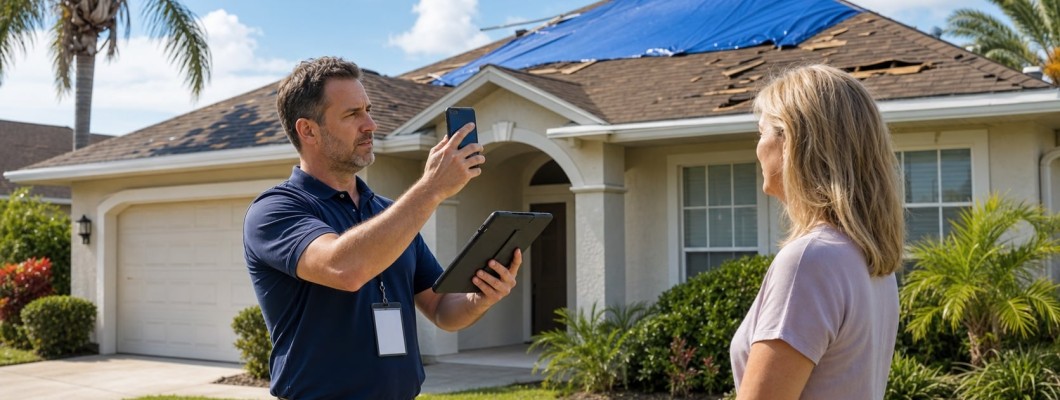
A Florida all-lines adjuster is a licensed insurance claims professional who investigates losses, checks whether the policy covers the damage, calculates what the claim may be worth, and helps settle the claim fairly and accurately. On a normal workday, that means reviewing claim files, inspecting damage, documenting facts, using estimating tools, and communicating with policyholders, contractors, repair shops, and other claim professionals.
Want to train for this role online? OLT’s 40-hour Accredited Claims Adjuster (ACA) course is fully online, includes the final exam online, and is designed to qualify eligible students to waive the separate Florida state licensing exam.
View the Florida 6-20 ACA courseWhat does a Florida all-lines adjuster do first when a claim comes in?
Most claims start with a notice of loss. The adjuster reviews the basic facts, opens the file, checks the policy information, and contacts the insured or claimant to begin the investigation and explain the next steps.
That early contact matters because adjusters are expected to act with promptness, due diligence, honesty, and fairness throughout the claim process. In Florida, claim handling is treated as a public service, so adjusters are expected to make complete investigations and truthful, unbiased reports of the facts.
Review the loss
The adjuster looks at what happened, when it happened, who was involved, and what property or people may have been affected.
Make contact
They call or email the policyholder, explain what information is needed, and help move the file forward without unnecessary delay.
Start documentation
They build the claim file with notes, photos, reports, invoices, statements, and other supporting records.
How do adjusters investigate losses?
Investigating a loss means finding out what actually happened and whether the facts support the claim. Depending on the type of claim, the adjuster may inspect a home, review repair invoices, collect photographs, speak with witnesses, review police reports, or compare statements against physical evidence.
Florida’s ethical rules require adjusters to make a complete investigation and avoid approaching adjustments or settlements in a way that is prejudicial to the insured. That is why strong file documentation, careful note-taking, and accurate fact gathering are a daily part of the job.
How do they confirm coverage?
Once the facts are clearer, the adjuster compares the loss to the policy. They review what type of coverage applies, what limits or deductibles matter, whether exclusions may affect payment, and what the contract says the insurer owes under the circumstances.
Florida’s code of ethics says adjusters must adjust claims strictly in accordance with the insurance contract and must be competent and knowledgeable about the terms and conditions of coverage. In practice, this means a large part of the workday involves reading policy language closely and matching it to real-world facts.
How do adjusters estimate damages?
Estimating damages is where many people begin to see the technical side of the profession. The adjuster evaluates repair or replacement costs, reviews labor and material pricing, and creates an estimate that supports the amount payable under the policy.
For residential property losses in Florida, adjusters must use an electronic estimating program when preparing a detailed written estimate, and that estimate must itemize materials, labor, equipment, and supplies using pricing that fits the local market. If an adjuster changes pricing or modifies the estimate output, they must be able to document and justify those changes.
Property claims
They may inspect roofs, drywall, flooring, cabinetry, water damage, or storm-related losses and convert those observations into a structured estimate.
Auto claims
They may review repair shop information, evaluate vehicle damage, and help determine whether repairs or total-loss valuation make more sense.
Liability claims
They may collect statements, review records, and evaluate damages before discussing a possible settlement.
What does negotiating settlements look like?
Negotiation is one of the most visible parts of the job, but it usually happens after the investigation and coverage review are already well documented. The adjuster explains the valuation, responds to questions, reviews additional documentation, and works toward a fair settlement based on the policy and the facts.
Florida’s ethical rules require adjusters to handle every adjustment and settlement with honesty and integrity and to allow a fair adjustment or settlement to all parties. They also may not discourage a claimant from seeking legal advice or obtaining help to protect the claimant’s interests.
What does a normal workday feel like?
A day in the life of an all-lines adjuster is usually a mix of communication, documentation, analysis, and follow-up. One hour may be spent reviewing a new claim, another may be spent on a site inspection or estimate review, and another may be used to answer emails, update reserves, request documents, or discuss settlement numbers.
Some adjusters work mostly from a desk, especially when handling claims by phone and computer. Others spend much more time in the field, especially during property losses, catastrophe events, or high-volume periods after severe weather.
Why do training and licensing matter so much?
Because the work affects real people, real property, and real money, adjusters need both technical knowledge and ethical judgment. Florida’s rules make clear that adjusters must be prompt, unbiased, honest, and knowledgeable, which is why quality pre-licensing education matters.
OLT’s 40-hour ACA course is approved by the Florida Department of Financial Services, delivered entirely online, includes the final exam online, and is designed to meet the educational requirement for the Accredited Claims Adjuster designation. According to the course page, successful completion can exempt eligible students from the Florida 6-20 state licensing exam, and the course can also serve as a first step toward the 3-20 Public Adjuster path.
Related course: If you want a flexible online option, the Florida 6-20 All-Lines Accredited Claims Adjuster Designation course from OLT offers immediate online access, self-paced study, and a certificate of completion after you pass.
Suggested URL slug: what-does-a-florida-all-lines-adjuster-do-day-to-day
FAQ
What does a Florida all-lines adjuster actually do day to day?
They investigate losses, review policy coverage, estimate damages, communicate with everyone involved in the claim, and negotiate settlements based on the policy and the documented facts.
Do all-lines adjusters only handle property claims?
No. The 6-20 license is broad and can apply to property, casualty, automobile, liability, workers’ compensation, and catastrophe-related claims depending on the role and employer.
Is estimating damage really part of the daily job?
Yes. Estimating is a core task because adjusters must determine the amount of claim, loss, or damage payable under the insurance contract and support that number with proper documentation.
Can you take OLT’s adjuster course online?
Yes. The OLT ACA course is fully online, self-paced, and includes the final exam online, so students can complete the training from home or work on a compatible device.
Where should new adjusters start?
If you are interested in becoming a Florida claims professional, the best starting point is usually a state-approved education path that teaches the real workflow of claims handling. That includes how to investigate losses, confirm coverage, estimate damage, document the file correctly, and settle claims ethically.
You can explore OLT’s online program here: Accredited Claims Adjuster Designation 40hr course.